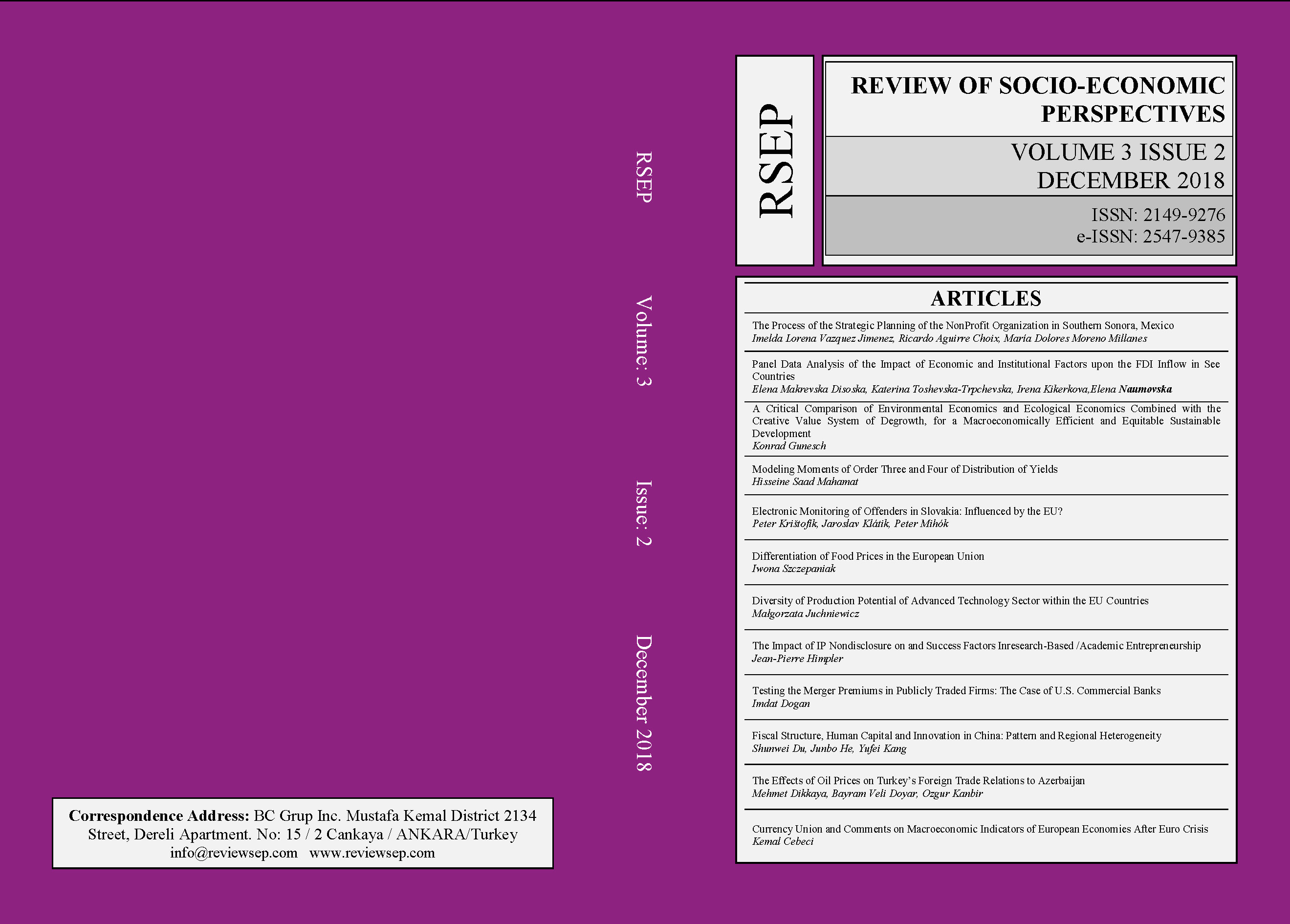
The Impact of IP Nondisclosure on and Success Factors in Research-Based/Academic Entrepreneurship
Keywords:
University spinouts, IP protection, patentsAbstract
For many years commercial products that developed out of university research are a topic of raising interest in academia. The major focus of existing investigations about commercialised academic research is put on developments with patent, thus formal intellectual property (IP) protection. Focus of this study is on unpatented research outcomes and their commercialisation at the example of a balance support tool. Further the study looks at other factors that have an impact on academic entrepreneurship. Whereas – so reveals the study – the pure existence of a patent attracts investors, it does not seem to influence the quantifiable success of a business. Product characteristics, the team behind, the product’s applications, market size and also the work with the academic research institution behind including its network have a major impact on the business’s outcome in numbers. Further influencing factors are the cost absorption of the product as well as feelings and luck of the entrepreneurial team. The aforementioned research results are findings of a qualitative single case study with additional interviews, and thus do not claim completeness and need to be tested on a larger quantitative scale.
Published
Issue
Section
License
Copyright and Open Access Policy
The Review of Socio-Economic Perspectives (RSEP) is committed to the principles of open access and the widest possible dissemination of scholarly knowledge. The journal provides immediate and unrestricted access to all published content, enabling readers worldwide to freely read, download, copy, distribute, print, search, and link to the full texts of articles without financial, legal, or technical barriers.
RSEP supports the principles of the Budapest Open Access Initiative (BOAI), which advocates free and unrestricted access to peer-reviewed scholarly research.
Copyright Ownership
Authors retain the copyright of their published works.
By submitting and publishing their manuscripts in RSEP, authors grant the journal a non-exclusive right to publish, reproduce, distribute, archive, index, and preserve the work in electronic and other formats for scholarly communication purposes.
The journal does not require authors to transfer copyright ownership to the publisher. Authors remain the legal copyright holders of their work after publication.
Licensing Policy
Beginning with Volume 2025, all articles published in RSEP are distributed under the terms of the Creative Commons Attribution-NonCommercial 4.0 International License (CC BY-NC 4.0).
Under the CC BY-NC 4.0 license, users are permitted to:
- Read, download, copy, and redistribute the material in any medium or format;
- Share the work with others;
- Adapt, remix, transform, and build upon the material;
provided that:
- Appropriate credit is given to the original author(s) and the journal;
- A link to the license is provided;
- Any changes made to the original work are clearly indicated;
- The material is not used for commercial purposes.
The full license terms are available at:
https://creativecommons.org/licenses/by-nc/4.0/
Previous Licensing Policy
Articles published before Volume 2025 were distributed under the Creative Commons Attribution 4.0 International License (CC BY 4.0).
The CC BY 4.0 license permits unrestricted use, distribution, adaptation, and reproduction in any medium, including commercial use, provided that appropriate credit is given to the original author(s) and source.
Articles published under CC BY 4.0 remain subject to the licensing terms that were in effect at the time of publication and are not retroactively relicensed.
Rights Retained by Authors
Authors retain the right to:
- Share their published articles on personal websites, institutional repositories, and academic networking platforms;
- Reuse parts or all of their work in future publications, books, teaching materials, and presentations;
- Deposit the published version of the article in repositories without embargo;
- Disseminate and promote their research freely.
Rights Granted to the Publisher
Authors grant RSEP the right to:
- Publish and disseminate the work as the original publisher;
- Archive and preserve the article permanently;
- Include the article in indexing, abstracting, and database services;
- Maintain the official version of record;
- Promote and distribute the published work through journal platforms and scholarly communication channels.
Open Access Statement
RSEP is a fully open-access journal. All articles are made freely available online immediately upon publication without subscription fees or access restrictions.
No embargo period is applied. Readers may access and use published content in accordance with the applicable Creative Commons license.
The journal believes that open access increases the global visibility, accessibility, usage, and impact of scholarly research while promoting the free exchange of scientific knowledge.
License Consistency
To ensure transparency and compliance with international indexing standards, the licensing information displayed on the journal website, article metadata, PDF files, and publishing platforms will remain consistent and accurately reflect the licensing terms applicable to each published volume.